Privacy Needs for Urban, Suburban, and Rural Homes
Key Takeaways
- Urban homes often require stronger privacy measures because neighbouring buildings, pedestrians, and shared spaces may be close to windows.
- Suburban homes generally need adjustable privacy because exposure can change between daytime and evening.
- Rural homes may have fewer nearby neighbours, but privacy can still be affected by roads, property layouts, and large windows.
- Window orientation, distance from neighbouring properties, room use, and natural light all influence the level of privacy required.
- Curtains and blinds can provide different levels of screening while helping households manage daylight.
Introduction
Privacy requirements vary considerably depending on where a home is located. Population density, building spacing, window placement, surrounding roads, and outdoor areas all affect how easily people can see into a property.
Urban, suburban, and rural homes therefore require different approaches to managing visibility. Understanding these differences can help households balance privacy with daylight, ventilation, and practical use of indoor spaces.
Urban Homes Require Maximum Privacy Without Losing Natural Light
Urban properties are often located close to neighbouring buildings, pavements, roads, and communal areas. Apartments and terraced properties may have windows directly facing other homes, creating a greater need to control visibility.
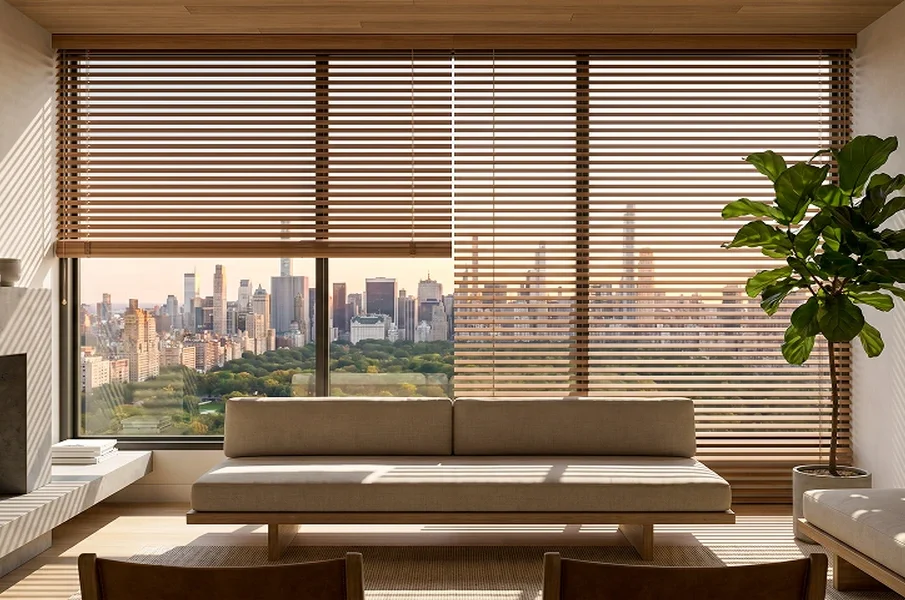
Keeping window coverings fully closed can provide privacy, but it may also reduce natural light. Adjustable treatments can help manage both requirements. For example, timber venetian blinds use tilting horizontal slats that can limit direct sightlines while allowing some daylight to enter.
Common privacy considerations in urban homes include:
- Street-facing rooms: Ground-floor windows can be visible to pedestrians and passing traffic.
- Opposing buildings: Apartments may directly face windows in nearby developments.
- Evening visibility: Interior lighting can make rooms more visible from outside after dark.
- Shared spaces: Corridors, balconies, courtyards, and communal areas can create additional sightlines.
Layered curtains and blinds can also provide different levels of coverage during the day and evening. A lighter layer can screen views during daylight, while a more opaque treatment can provide greater privacy after dark.
Overall, urban homes often benefit from adjustable privacy measures that reduce exposure without unnecessarily blocking daylight.
Suburban Homes Need Flexible Privacy Throughout the Day
Suburban properties typically have more separation between buildings than dense urban homes. However, front gardens, driveways, neighbouring properties, and residential streets can still create direct views into living spaces.
Privacy requirements can also change according to the time of day. A front-facing living room may need moderate screening during daylight but greater coverage once indoor lights are switched on.
| Area | Common Privacy Concern | Practical Approach |
| Front windows | Views from streets and footpaths | Adjustable window coverings |
| Side windows | Neighbouring properties | Partial or full screening |
| Rear rooms | Gardens and overlooking homes | Flexible coverings |
| Bedrooms | Greater need for seclusion | More opaque treatments |
The layout of suburban homes also means different rooms may require different solutions. Timber venetian blinds, for example, can offer adjustable screening in living spaces where residents want to regulate both privacy and natural light.
Suburban privacy is therefore less about maintaining maximum coverage throughout the day and more about adapting window treatments to changing conditions.
Rural Homes Focus More on Environmental Comfort Than Neighbours
Rural homes are generally associated with lower building density, which can reduce direct overlooking from neighbouring properties. However, greater distance between homes does not remove every privacy consideration.
Properties may still be visible from public roads, footpaths, farm access routes, or neighbouring land. Large windows designed to take advantage of open views can also increase visibility from certain directions.
Window treatments in rural properties may therefore serve several functions:
- providing privacy in bedrooms and bathrooms;
- reducing visibility from nearby roads or paths;
- managing glare from direct sunlight;
- controlling daylight in rooms with large windows;
- supporting comfortable use of rooms at different times of day.
The choice of curtains and blinds may consequently depend as much on light management and room function as on neighbouring properties. Window orientation and the surrounding landscape should also be considered when deciding how much coverage is necessary.
In summary, rural homes may face fewer direct privacy pressures, but window placement and environmental exposure still influence appropriate privacy measures.
FAQs
Which homes generally need the most window privacy?
Urban homes often have greater privacy requirements because buildings, pavements, and communal spaces can be located close to windows. Actual requirements still depend on the individual property’s layout and surroundings.
Can window coverings provide privacy without blocking all natural light?
Yes. Adjustable blinds and lighter window coverings can reduce direct visibility while allowing daylight into a room. The effectiveness depends on the material, opacity, position, and external lighting conditions.
Why does privacy change between daytime and night?
During daylight, brighter outdoor conditions can make it harder to see into some interiors. At night, illuminated rooms can become more visible from darker outdoor areas, so additional coverage may be required.
Do rural homes still need privacy window treatments?
Yes. Rural properties can still be visible from roads, paths, neighbouring land, or other buildings. Window treatments can also help manage sunlight, glare, and general indoor comfort.
Contact De Art Studio for curtains and blinds designed to balance natural light, privacy, and everyday comfort for every type of home.