Best Ceiling Fans for Bedrooms: How to Balance Airflow, Noise and Comfort
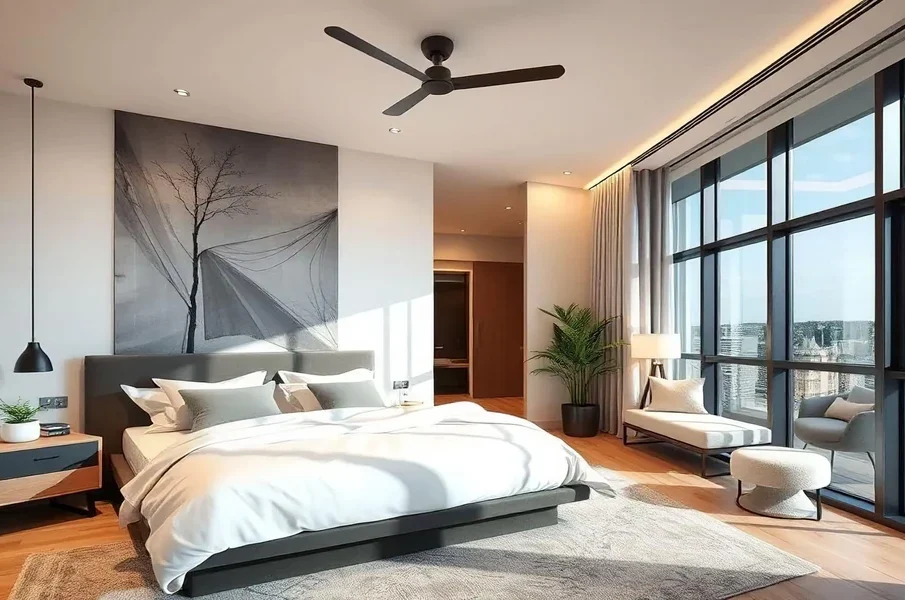
A peaceful night of sleep depends heavily on maintaining a cool, quiet, and comfortable bedroom environment. Elevated night-time temperatures disrupt sleep cycles, leaving you feeling exhausted and unrefreshed in the morning. While air conditioning provides fast cooling, running it constantly throughout the night drives up energy bills and causes dry air that irritates your throat and nasal passages. The best ceiling fans designed for sleeping quarters offer a natural, energy-efficient solution that delivers gentle air movement without disruptive noise.
Understanding Motor Technology for Silent Operation
Noise remains the single biggest factor when choosing a fan for your sleeping space. Traditional AC (Alternating Current) motors often produce a persistent low-frequency hum that disturbs light sleepers. Modern DC (Direct Current) motor technology has transformed bedroom cooling by drastically reducing operational noise and power consumption.
DC motors convert AC electricity internally, enabling smoother rotational mechanics and whisper-quiet motor performance. These motor systems consume up to 70% less energy than conventional AC models while offering wider speed variation. Upgrading to a DC-powered unit allows you to run low, quiet speeds during sleeping hours while enjoying substantial long-term savings on your electrical bills.
Blade Design and Aerodynamic Airflow Efficiency
Blade pitch and material selection directly influence how effectively a fan pushes air across a room without creating excessive wind noise. Steeper blade pitch angles, typically between 12 and 15 degrees, allow the blades to scoop and circulate larger volumes of air at lower rotational speeds.
| Fan Feature | Impact on Noise Level | Impact on Airflow Quality | Ideal Sleep Benefit |
| DC Motor System | Eliminates mechanical hum | Delivers micro-adjustable speed steps | Gentle, whisper-quiet operation overnight |
| Steep Blade Pitch | Reduces wind turbulence | Pushes higher volume at lower RPM | Sweeping, natural breeze without buffeting |
| ABS Synthetic Blades | Cuts vibration and wobbling | Maintains aerodynamic stability | Smooth, consistent air dispersion |
| Sleep Mode Timer | Operates silently in the background | Automatically tapers airflow speed | Prevents midnight thermal chills |
Aerodynamically sculpted synthetic blades, made from materials like ABS plastic or composite resins, glide through the air far more smoothly than traditional flat wooden or stamped metal blades. Smooth airflow mechanics eliminate choppy wind buffeting, producing a continuous, soothing breeze that cools your body naturally without generating disruptive rustling noises.
Sizing Your Fan for Optimal Room Coverage
Installing an incorrectly sized fan severely compromises both airflow performance and acoustic comfort. A fan that measures too small must spin at maximum speed to move air across the room, producing unnecessary motor strain and elevated wind noise. Conversely, an oversized fan creates overpowering draft forces that feel uncomfortable during sleep.
Measure your bedroom’s dimensions before selecting a fan model. Compact bedrooms measuring under ten square metres benefit from smaller blade spans between 44 and 48 inches. Master bedrooms spanning over twelve square metres require larger 52 to 56-inch spans to distribute air evenly across the entire mattress surface. Mounting the fan at least 2.3 metres above the floor guarantees optimal air distribution and complete safety.
Intelligent Controls and Night-Time Modes
Modern air solutions offer smart functionality designed specifically to enhance sleep quality. Multi-speed remote controls allow you to adjust airflow settings easily without stepping out of bed. Many top-tier models feature specialized natural breeze settings that vary rotational speed dynamically, simulating gentle outdoor wind patterns.
Sleep timers and temperature-responsive sensor modes prove particularly valuable overnight. As ambient temperatures drop during early morning hours, smart fans automatically decrease their speed setting, preventing you from waking up feeling chilled. Look for units equipped with dimmable LED lights so you can create a soft, warm ambiance in your bedroom without needing extra light fixtures.
Frequently Asked Questions
Which motor type is quieter for a bedroom, AC or DC?
DC motors operate far more quietly than traditional AC motors. They eliminate electrical hums almost completely and provide micro-stepped speed control, making them ideal for light sleepers.
What is the best blade size for a standard master bedroom?
A standard master bedroom measuring around twelve to fifteen square metres performs best with a 52-inch to 56-inch ceiling fan. This size moves ample air at low rotational speeds, maintaining a silent, gentle breeze.
How do I maintain my bedroom fan to prevent clicking noises over time?
Wipe down fan blades regularly to remove accumulated dust that unbalances the motor. Check mounting screws annually to keep all connections tight and prevent clicking or wobbling during operation.
Contact KDK to enjoy ultra-quiet performance, advanced energy efficiency, and gentle airflow tailored perfectly for a peaceful night’s sleep.