Does Your Building Need a Chiller Plant or Ground Loops
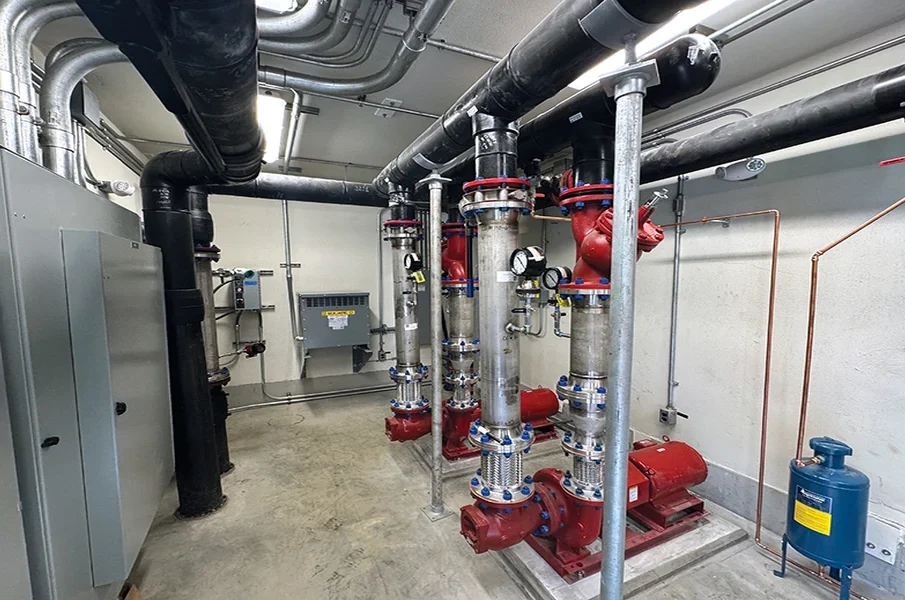
A two story dental office and a twelve story hospital wing can sit on the same Maryland street and still need completely different heating and cooling equipment. What separates them is load: how much heat the building picks up from people, lighting, computers and sun, how much it loses through its walls on a January night, and whether those numbers hold steady or swing by the hour. The floor area sets the scale. Heat load sets the shape.
The climate across Maryland, Virginia and DC adds its own pressure. Summers are long and humid, so cooling equipment has to pull moisture out of the air, not just lower the temperature. Winters bring real cold, more so west toward Frederick and the mountains than in downtown DC. A building with a busy server closet or packed lecture hall may need cooling even in February.
Most decisions come down to five families of equipment. Geothermal and water source heat pumps move heat through a shared water loop. Chilled water plants pair chillers with cooling towers to carry very large loads. Boilers deliver heat through hot water or steam. Split systems serve smaller zones with an outdoor and an indoor unit. CRAC units keep equipment rooms cool and dry around the clock. Each carries a trade-off worth knowing before a design is approved.
For residential and commercial properties across the region, Maryland Mechanical Services LLC brings particular depth in geothermal heat pumps, water source heat pumps, chillers and cooling towers, the systems where load and layout shape the whole design. The team, based in Frederick, also installs and services boilers and CRAC units, so a building that pairs a hydronic heating plant with a dedicated equipment room can be handled by one contractor. If you are planning a new building or replacing aging equipment, request a system consultation before the equipment list is locked in.
Geothermal and Water Source Heat Pumps
How it works. Both systems use water as the place to dump or collect heat. A geothermal heat pump circulates fluid through pipes buried in the ground, where temperatures stay far steadier than outdoor air. Illinois Extension notes that closed loop designs are more common than open loop ones, with sealed loops laid vertically, horizontally or in a pond or lake. A water source system places many small heat pumps through a building on one shared loop that a boiler and cooling tower, or a ground loop, keep in range.
Best fit. Geothermal suits buildings with room for a bore field: schools, churches, campuses and larger homes. Water source loops fit midsize offices, hotels and apartment buildings where many rooms want their own thermostat. When the sunny side cools while the shaded side heats, units trade heat through the loop.
What drives upkeep. Filters, coils and condensate pans at every unit, plus loop pumps and water treatment. Buried loops have no moving parts, but in Maryland vertical geothermal wells require a well permit through the local health department and a licensed driller.
Main trade-off. Ground work raises the upfront cost in exchange for steady operation. Water source systems spread many compressors through occupied space, which means more units to service and some sound near tenants.
Chillers With Cooling Towers
How it works. A chiller produces cold water that is piped to air handlers on every floor. Water cooled chillers send their heat to a cooling tower, where warm water falls through fill while fans move air across it. Some water evaporates and carries the heat away.
Best fit. Large offices, hospitals, university buildings and multi building campuses, including many of the institutional and government buildings around DC.
What drives upkeep. Water chemistry above all. The EPA’s WaterSense guidance on cooling towers reports that towers often account for 20 to 50 percent or more of a commercial facility’s total water use. Scale, corrosion and biological growth need constant treatment.
Main trade-off. Unmatched capacity for big loads, but the plant needs space, trained operators and a constant treatment program.
Boilers
How it works. A boiler heats water or makes steam, then pumps it to radiators, baseboard, fan coils or heating coils inside air handlers.
Best fit. Older masonry apartment buildings, rowhouse conversions, schools and churches with existing radiators.
What drives upkeep. Combustion tuning, venting, safety controls and water quality. Many commercial boilers fall under periodic state inspection.
Main trade-off. Even, comfortable heat with no cooling at all, so a separate system has to handle Mid Atlantic summers.
Split Systems
How it works. An outdoor unit connects to an indoor air handler or ductless wall heads through refrigerant lines.
Best fit. Homes, small offices, shops, restaurants, additions, and older downtown buildings with no room for ductwork.
What drives upkeep. Filters, coils, refrigerant charge and condensate drains, which work overtime in humid July weather. Newer equipment is moving to lower impact refrigerants under federal rules.
Main trade-off. Low cost and simple zoning, but a large building ends up with dozens of separate units and line sets to maintain.
CRAC Units
How it works. A computer room air conditioner is a precision unit with its own compressor that holds temperature and humidity within tight limits for servers, network gear or imaging equipment.
Best fit. Server rooms, telecom closets, labs and hospital equipment rooms, including the single server room in a typical office.
What drives upkeep. Continuous runtime. Filters, humidifier parts, alarms and backup units need routine testing.
Main trade-off. Precise, constant control at the cost of a dedicated system, since a comfort system that sets back at night cannot protect equipment.
Side by Side
| System | Best-fit building | Main trade-off |
|---|---|---|
| Geothermal heat pumps | Schools, churches, campuses, larger homes with land | Higher ground work cost for steady performance |
| Water source heat pumps | Midsize offices, hotels, apartments | Many units to service inside occupied space |
| Chillers with cooling towers | Hospitals, large offices, campuses | Needs operators, space and water treatment |
| Boilers | Older masonry buildings, radiator heated properties | Heat only, cooling must be added |
| Split systems | Homes, small offices, shops, additions | Unit count grows quickly in large buildings |
| CRAC units | Server, telecom and equipment rooms | Separate system dedicated to one room |
Reading Your Own Building
Few buildings fit one category cleanly. A hospital may run a chiller plant, a boiler plant and several CRAC units at once, while a mixed use building might pair a water source loop with ductless splits for ground floor retail. The useful starting point is a room by room load calculation that shows where heat is gained, where it is lost and when. With those numbers in hand, the right mix of equipment gets much easier to see.